Image


Fast, affordable Internet access for all.

In January, we released our new census of municipal networks in the United States for 2024, and the significant growth that we've seen over the last two years as more and more cities commit to building Internet infrastructure to add new tools for their local government, incentivize new economic development, and improve connectivity for households.
The trend has not gone unnoticed by the monopoly players and their allies; we've seen new dark-money campaigns on both the East Coast and in the west, as astroturf campaigns and misinformation efforts have increased.
A new short documentary by Light Reading does a great job of outlining the stakes for local governments, residents stuck on poor connections, and the incumbents as the wave of municipal networks grows. Featuring the network in Loveland, Colorado and context by advocates like the American Association for Public Broadband (AAPB) Executive Director Gigi Sohn and Washington State Representative Drew Hansen, it's well worth watching.
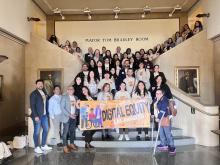
As California aims to boost broadband competition and Los Angeles County pursues what could be the biggest municipal broadband network ever built, local activists say they’ve made some meaningful recent inroads on both improving broadband mapping, and regulatory reform that should aid the equitable deployment of modern, affordable access.
Recently, inroads have been made on fixing long-broken California cable franchise law. In the early aughts, cablecos (and telcos pushing into the TV business) successfully lobbied for state-level “cable franchise reform” laws they promised would dramatically lower prices. In reality, such bills were often little more than legislative wishlists crafted by telecom giants.
Often these state-level replacements for local franchise agreements eroded legal regulatory authority, eliminated long standing requirements for uniform broadband and TV deployment, and in some states–like Wisconsin–even acted to strip away local consumer protections and eminent domain rights. Warnings by academics on this front were widely ignored.
Seventeen years after its passage, California activists say that California’s 2006 Digital Infrastructure and Video Competition Act (DIVCA) was no exception.
Despite the release of the first draft of the new national broadband maps at the end of last year (and the first round of location-level and service availability corrections completed a couple of weeks ago), we're not holding our breath that 2023 will spell the end of the technology news cycle story trope of the family that buys a new house and learns that the monopoly ISPs don't actually know where they provide service in their territories across the United States.
How, more than three decades after we began rolling out national information infrastructure, does such a basic failure persist? Sometimes, it happens because network infrastructure has changed hands so many times (and with so many layoffs), that documentation has become tangled and gap-ridden. In many instances, however, it's purposeful: ISPs have for years claimed they just don't know where they offer service to, and that it would be too expensive to find out: all as part of a larger strategic plan to prevent competition. Meanwhile, the nation's premier telecommunications expert regulatory agency - the FCC - has bought this line with little pushback.
The problem is that when it happens, it's rarely the provider that gets punished. Instead, it's homeowners who assumed that moving to a suburb meant there would be Internet access nearby, only to discover that bad DSL or worse geostationary satellite service are the only options. Perhaps most frustratingly is when the provider itself - like Comcast did to a family closing on a new house in Buckley, Washington in 2021 - tells a family it services an address and completes a work order, only to cancel the install a couple of days before closing and demand $19,000 from the family for the pleasure of becoming a subscriber. Comcast seems to be a particularly bad offender, though of course Charter Spectrum, RCN, and others habiltually do it too.
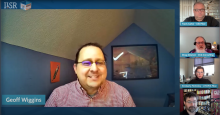
This is exactly what happened to Geoff Wiggins when his family moved to Ohio. On the most recent episode of the Connect This! Show, Geoff joins to share what happened when he moved to a house and discovered that it was in the Bermuda Triangle of broadband service, and what he's done to try and fix it.

Join us live on Thursday, August 4th, at 4pm ET for the latest episode of the Connect This! Show. Co-hosts Christopher Mitchell (ILSR) and Travis Carter (USI Fiber) will be joined by regular guests Kim McKinley (UTOPIA Fiber) and Doug Dawson (CCG Consulting) to talk about all the recent broadband news fit to print.
Subscribe to the show using this feed on YouTube Live or here on Facebook Live, on find it on the Connect This! page.
Email us broadband@muninetworks.org with feedback and ideas for the show.
Watch here on YouTube Live, here on Facebook live, or below.
Join us live on Thursday, July 28th, at 4pm ET for the latest episode of the Connect This! Show. Co-hosts Christopher Mitchell (ILSR) and Travis Carter (USI Fiber) will be joined by Peggy Schaffer (Director, ConnectME), Andrew Butcher (President, Maine Connectivity Authority), and Christa Thorpe (Community Development Officer, Island Institute).
The panel will dig into recent anti-municipal propaganda in the New England area, with an emphasis on Maine. They'll talk about the astroturf campaign being waged by groups like the Alliance for Quality Broadband (a front organization for Charter Spectrum) and recent blows to municipal broadband they've fueled in places like Southport and Readfield. The panel will talk who really loses out when the monopoly providers persuade voters and local officials to defer leadership on imrpoving community connectivity. Christa Thorpe will join halfway through the show to share her experiences and perspective.
Subscribe to the show using this feed, view the show on YouTube Live or on Facebook Live, or find it on the Connect This! page.
Email us broadband@muninetworks.org with feedback and ideas for the show.
Watch here on YouTube Live, here on Facebook live, or below.
Join us live on Thursday, July 21st, at 5pm ET for the latest episode of the Connect This! Show. Co-hosts Christopher Mitchell (ILSR) and Travis Carter (USI Fiber) will be joined by regular guests Kim McKinley (UTOPIA Fiber) and Doug Dawson (CCG Consulting) to talk about all the recent broadband news fit to print.
This includes everything from the Notice of Inquiry on updating the definition of broadband to 100/20 Megabits per second (Mbps) by Federal Communications Commission Chairwoman Jessica Rosenworcel, to recent announcements of public/private partnerships, to what will happen with some of the national ISPs getting more subsidies to expand Internet access, to expectations around the Buy America provisions of key broadband subsidies.
Subscribe to the show using this feed on YouTube Live or here on Facebook Live, on find it on the Connect This! page.
Email us broadband@muninetworks.org with feedback and ideas for the show.
Watch here on YouTube Live, here on Facebook live, or below.

Join us live on Thursday, June 23rd, at 4pm ET in the chat for the latest episode of the Connect This! Show. Co-hosts Christopher Mitchell (ILSR) and Travis Carter (USI Fiber) will be joined by regular guests Kim McKinley (UTOPIA Fiber) and Doug Dawson (CCG Consulting).
The panel will discuss Verizon and T-Mobile Fixed Wireless Access (FWA) adds, LTE versus Starlink, and Dish and the future and impact of the 12GHz spectrum bands. They'll also touch on a few other topics, including the headaches and heartaches of the Affordable Connectivity Program (ACP), rhetoric versus reality when it comes to municipal broadband, and the real cost in transitioning from DSL to fiber.
Subscribe to the show using this feed on YouTube Live or here on Facebook Live, on find it on the Connect This! page.
Email us broadband@muninetworks.org with feedback and ideas for the show.
Watch here on YouTube Live, here on Facebook live, or below.

Sometimes we come across a fun bit of Internet history that we think is worth highlighting. In this case, Travis Carter, co-host of our Connect This! show, sent this fun and informative history of dial-up broadband over our way and we thought some of you would want to watch it in its entirety.
Granted, this is focused on England, but the principles are the same. And frankly, who doesn't enjoy that British accent when watching a 30+ minute documentary on dial-up modems?
Header image by Praveen kumar Mathivanan on Unsplash

Join us live on Thursday, June 9, at 5pm ET in the chat for the latest episode of the Connect This! Show. Co-hosts Christopher Mitchell (ILSR) and Travis Carter (USI Fiber) will be joined by Alan Fitzpatrick (Co-Founder and CEO of Open Broadband in North Carolina) and Matt Larsen (CEO of Vistabeam).
The panel will discuss the range of wireless approaches used in rural and urban areas to reach subscribers, how it competes with fixed broadband deployments using various technologies, and the advantages and challenges of it brings to the tool chest. They'll also talk about unlicensed versus licensed spectrum, Tarana, and how the federal broadband funding programs will change the landscape for fixed wireless in the near and long term.
Subscribe to the show using this feed on YouTube Live or here on Facebook Live, on find it on the Connect This! page.
Email us broadband@muninetworks.org with feedback and ideas for the show.
Watch here on YouTube Live, here on Facebook live, or below.

Join us today, June 2, at 5pm ET in the chat for the latest episode of the Connect This! Show. Co-hosts Christopher Mitchell (ILSR) and Travis Carter (USI Fiber) are joined by regular guests Kim McKinley (UTOPIA Fiber) and Doug Dawson (CCG Consulting).
The panel will dig into recent news on the BEAD program (including Alan Davidson's remarks at the Mountain Connect conference last week) and what we're likely to see with states that continue to maintain restrictions on municipal solutions. They'll also talk about the New York City Master Broadband Plan, and end with thoughts on Arkansas and Indiana creating middle mile consortia with co-ops.
Subscribe to the show using this feed on YouTube Live or here on Facebook Live, on find it on the Connect This! page.
Email us broadband@muninetworks.org with feedback and ideas for the show.
Watch here on YouTube Live, here on Facebook live, or below.